A Structural Shift in Furniture Manufacturing
The concept of a “smart factory” has evolved significantly over the past decade. In 2026, a smart furniture factory is no longer defined simply by having CNC machines or automated cutting systems. Instead, it represents a fully integrated production ecosystem where machinery, materials, software, and workflow management operate as a coordinated system. Driven by rising labor costs, customization demand, and global trade uncertainty, furniture manufacturers are rethinking how efficiency and flexibility are structured across the entire production chain. Below are the core elements that define a smart furniture factory in 2026.
1. System Integration Over Standalone Equipment
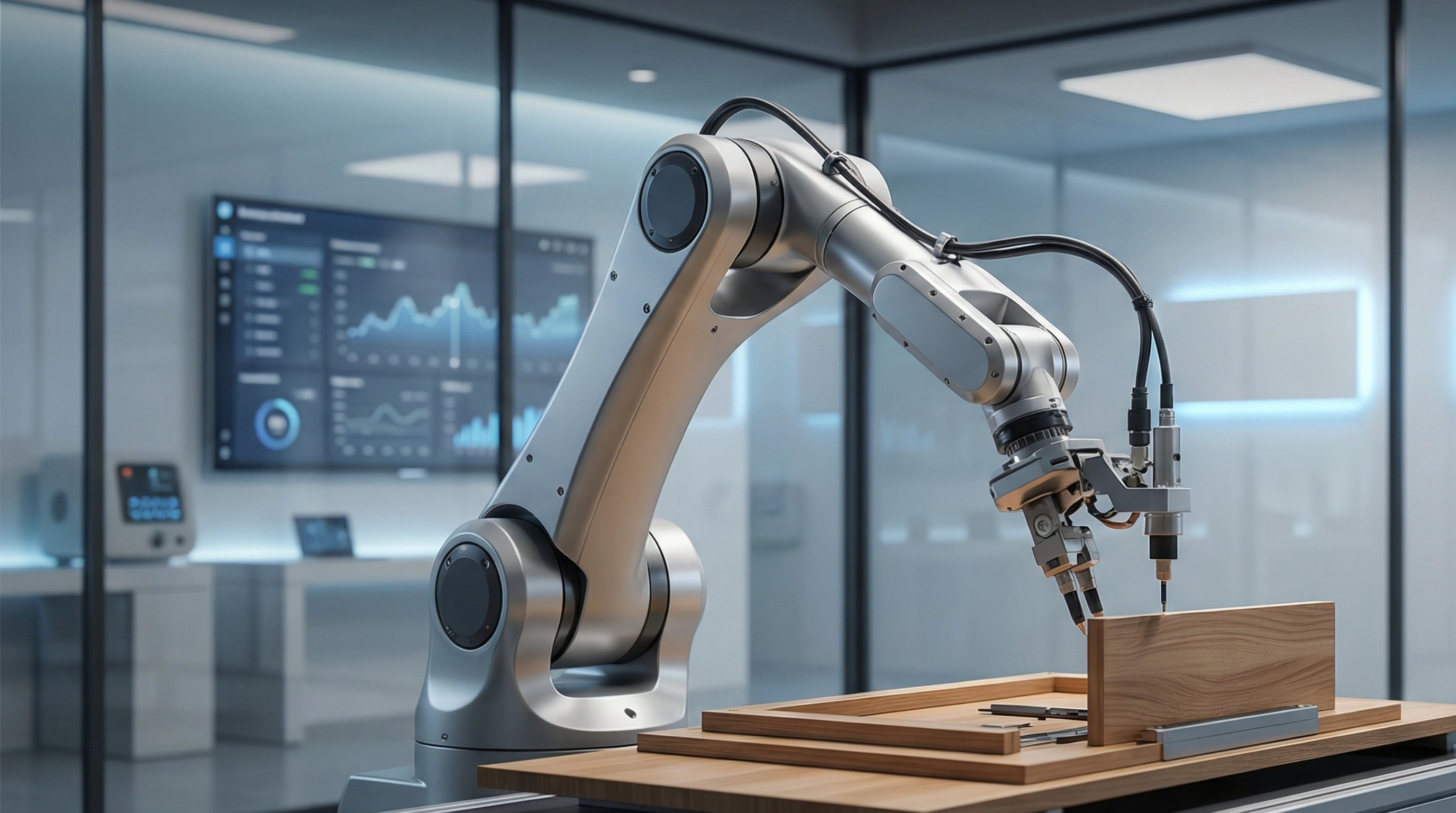
In earlier stages of modernization, factories often upgraded one machine at a time — adding a CNC router, an edge banding machine, or a drilling unit independently. In 2026, competitive manufacturers prioritize system integration:
Automated material handling systems
Digital production scheduling
Real-time data synchronization
Cross-machine communication
The focus shifts from machine performance to workflow performance. A smart factory minimizes bottlenecks by aligning cutting, edge banding, drilling, surface finishing, and packaging into a cohesive process rather than isolated operations.
2. Flexible Manufacturing as a Core Capability
Mass production is no longer the dominant model in many furniture segments. Customization, small-batch production, and light high-end furnishing (often referred to as “light customization”) are reshaping order structures. A smart factory in 2026 must handle:
Mixed material processing
Flexible manufacturing systems (FMS) allow producers to switch between product types without significant downtime. Software-driven nesting, automated tool changing, and modular line configurations are key enablers of this flexibility. Efficiency today is not just about speed — it is about adaptability.
3. Data Visibility and Production Transparency
Digitalization is one of the defining features of a modern furniture plant. Smart factories deploy:
Manufacturing Execution Systems (MES)
Real-time machine monitoring
Predictive maintenance systems
Production managers can track machine utilization, defect rates, material consumption, and delivery schedules in real time. This visibility allows:
Better production planning
Data is no longer collected for reporting purposes only — it directly drives operational decisions.
4. Automation to Address Labor Constraints
Global labor shortages and rising wages have accelerated automation investment. In 2026, automation in furniture factories includes:
Automatic loading and unloading systems
Robotic sanding and finishing
Intelligent sorting and labeling
AGV (Automated Guided Vehicle) material transport
The objective is not full labor replacement but labor optimization — reallocating human resources toward supervision, quality control, and design-intensive tasks. Factories that reduce manual dependency gain cost stability and operational resilience.
5. Precision and Surface Quality as Competitive Differentiators
As market competition intensifies, product quality becomes a key brand differentiator. Technologies gaining traction include:
Laser edge banding for seamless finishing
High-precision five-axis machining
Advanced surface treatment systems
Integrated inspection solutions
Smart factories combine precision engineering with repeatability. This ensures consistent results across high-volume and customized production alike. Quality is engineered into the system — not inspected at the end.
6. Sustainability and Energy Efficiency
Environmental compliance and ESG considerations are becoming structural requirements rather than optional branding elements. A smart furniture factory incorporates:
Energy-efficient motors and drives
Dust collection and recycling systems
Optimized material nesting to reduce waste
Water-saving finishing technologies
Sustainability increasingly aligns with cost efficiency. Lower energy consumption and material waste directly improve profit margins.
The Broader Industry Context
Global trade policies, fluctuating tariffs, and shifting supply chains have introduced new levels of uncertainty in the furniture sector. In response, manufacturers are investing in operational control and structural efficiency rather than relying solely on price advantages. The transition toward smart factories reflects a broader strategic shift:
From scale expansion → to capability enhancement
From price competition → to system efficiency
From reactive production → to data-driven manufacturing
Conclusion
In 2026, a smart furniture factory is defined not by the number of machines installed, but by the level of integration, flexibility, and data intelligence embedded within its production system. Manufacturers that successfully combine machinery, materials, and digital coordination into a unified framework are better positioned to navigate economic volatility and rising customization demands. Industry platforms such as WMF (China International Furniture Machinery & Woodworking Machinery Fair (Shanghai), China, September 5–8, 2026) continue to serve as observation points for these structural transformations, where machinery, materials, and system solutions converge to reflect the evolving logic of furniture manufacturing.




 Firefox
 Chrome
 Safari
 QQ
QQ Edge
Edge